Ayutthaya Dreams of THAILAND

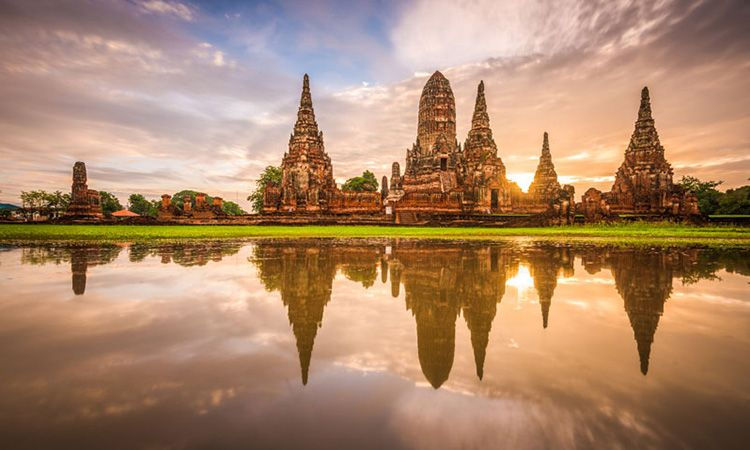
The richest largest city of southeast Asia in the seventeenth and eighteenth centuries, Ayutthaya, capital of Siam, fell to the Burmese on the night of April 7, 1767. With a ferocity unprecedented in centuries of intermittent warfare, the invaders stormed, sacked, and torched the city, and the glory of what had been the Siamese seat of power for more than 400 years was lost forever.
Rallying with exceptional speed and fortitude, the Siamese succeeded in driving the Burmese from their lands. Ayutthaya, however, was beyond rebuilding, and a new capital was founded further down the Chao Phraya River, briefly at Thonburi, then permanently at Bangkok.
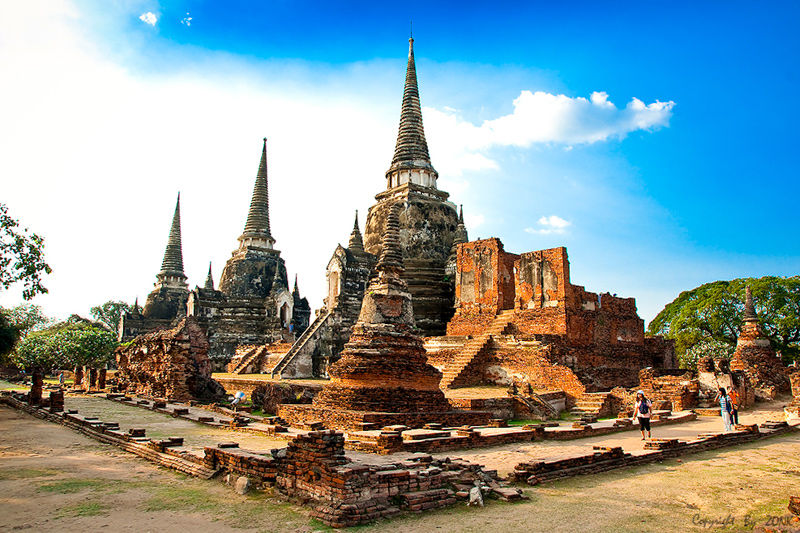
Today, Ayutthaya thrives still, but only as a provincial hub. Gone is the city's former regal splendour, its spectacular pageantry, and multicultural air. Yet, images of the past are conjured by the many ruins preserved in what is now a World Heritage site.
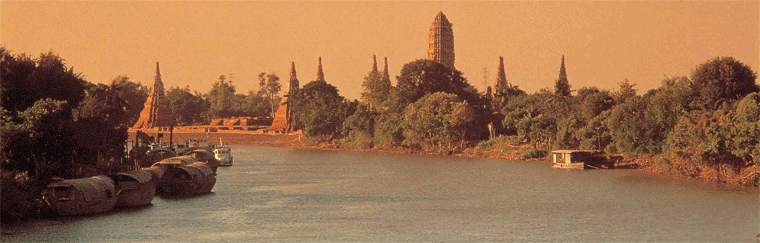
An Oriental Venice, Ayutthaya was founded in 1350 as an island city created at the junction of three rivers: the Lopburi Pa Sak, and Chao Phraya. Growing steadily in size, power, and wealth, the city in its heyday was ringed by fort-studded walls twelve kilometers in circumference and criss-crossed by a 140-kilometer network of canals. Within the walls were some of the most magnificent buildings to be seen in the Orient, among them huge palaces and countless temples whose soaring tiled roofs and gilded spires glistened in the sunlight.
Uniquely and classically Siamese in appearance, Ayutthaya was cosmopolitan in atmosphere. Boosting an estimated local population of one million were foreign merchants, mercenaries, and adventures. They came from Portugal, Holland, England, Persia, and India, and from China and Japan, sailing up the 140 river kilometers to the city where fortunes were to be made in trade.
Today, it is still possible to make the journey to Ayutthaya by river, cruising back in time from Bangkok's high-rises and expressways, and passing on the way the royal summer retreat of Bangpa-in, with its curious blend of Thai, Chinese, and Victorian Gothic architectural styles.
Approaching Ayutthaya by river, the evocative ruins of several riverside monuments give an insight into the city's former island character. On the Pa Sak River, close to its junction with the Chao Phraya, stands Wat Phanan Choeng, notable for its huge, revered image of the seated Buddha: westward, up the Chao Phraya, lies Wat Phuthai-Sawan, its central tower and smaller rising in sharp contract to the European form of nearby St. Joseph's Cathedral, while the imposing Wat Chaiwattanaram echoes the design of Angkor Wat Cambodia.

In the heart of the city, Wat Phra Sri Sanphet, the royal temple within the compound of the now vanished king's palace, is distinguished by a row of three finely restored Ayutthaya-style. To the east are the extensive ruins of Wat Mahathat, once the residence of the City Patriarch.
Better preserved, and standing as one of Ayutthaya's finest temples, is Wat Rachaburana, built in 1424 by King Borommaracha II on the cremation site of his two elder brothers, who killed each other in a struggle for the throne. The crypt of the main tower was excavated in 1957, revealing a treasure-trove collection of gold and jewellery that is now displayed in the Chao Sam Phraya National Museum.
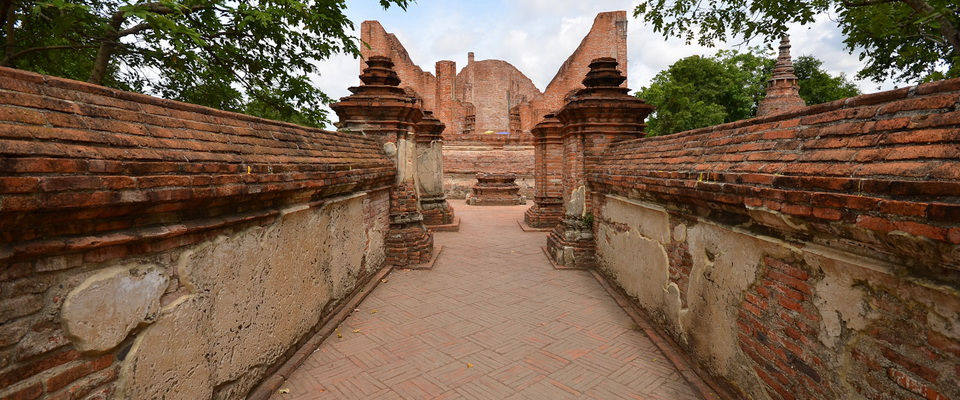
Exploring the city further is to find history unfolding. Wat Phra Ram, for example, was built in 1369 by King Ramesuen, Ayutthaya's second king, on the cremation site of his father, King U-Thong, while across the Pa Sak River, the of Wat Yai Chai Mongkol commemorates King Naresuan's vitory in single-handed combat, on elephant-back, over the Crown Prince of Burma in 1592. Some two kilometers northwest of the city, Phu Khao Thong rises majestically above the flat countryside. Ironically, this golden was originally built by the Burmese in 1569 to mark their first conquest of Ayutthaya, but the present structure dates from 1745 and, like Ayutthaya's other monuments, it stands as a mute witness to Thailand's rich past and the survival of a proud nation.

Ayutthaya, There are many beautiful temples. and beautiful rivers. It is a major tourist city of Thailand. Come Travel, greet, food delicious, Experience the folk way. With Ayutthaya our old town, our keep old. Welcome to Thailand.
Thanks for the article from book Dreams of Thailand Ayutthaya / John Hoskin Text

Comments